

SEO Services for Therapists Competing in Local Search
Oct 8, 2026


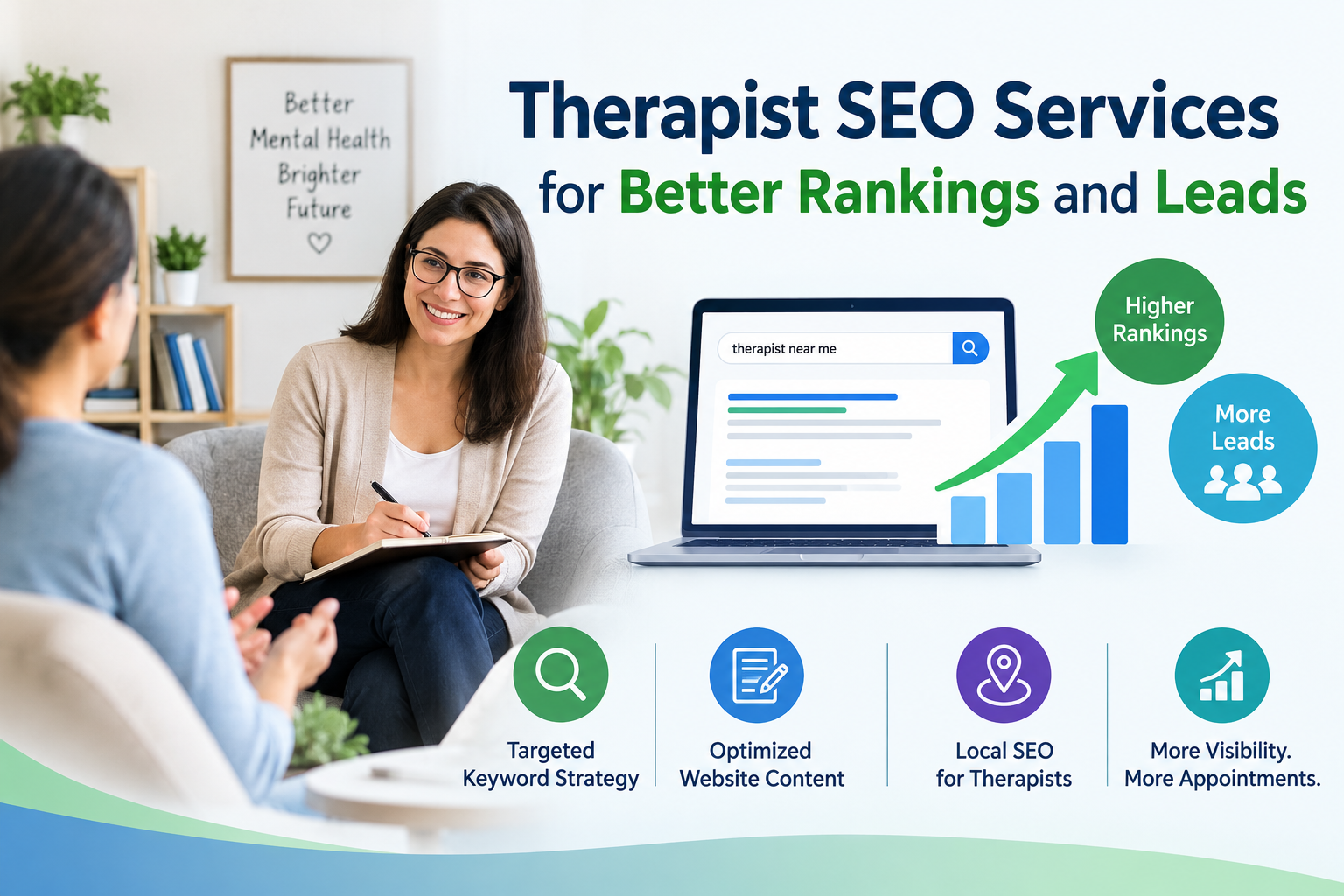
For many therapy practices, having a professional website is only the beginning of building a strong online presence. Potential clients need to be able to find that website when they search for services such as anxiety therapy, couples counseling, trauma support, or individual therapy. With numerous therapists competing for visibility in search results, a strategic approach to search engine optimization can help a practice attract more relevant visitors and turn online searches into genuine inquiries.
Search engine optimization is not simply about ranking higher. The real goal is to connect a therapy practice with people who are actively looking for the services it provides. When SEO is handled thoughtfully, it can improve website visibility, strengthen credibility, increase qualified traffic, and create more opportunities for prospective clients to get in touch.
People often use search engines as an important starting point when looking for professional services. A prospective client may search for a therapist by specialty, location, treatment approach, or specific concern. If a practice does not appear prominently for these relevant searches, potential clients may choose another provider.
Therapist SEO Services can help practices build a stronger foundation for organic search visibility. This involves optimizing website content, improving technical performance, targeting relevant search terms, and making the site easier for both visitors and search engines to understand.
Unlike paid advertising, organic SEO can continue generating visibility after individual campaigns have ended. However, it requires consistent attention, quality content, and ongoing improvement.
Effective SEO begins with understanding what potential clients are searching for. A therapist may offer several specialties, but not every keyword will attract the same type of visitor.
For example, someone searching for “therapist near me” may have different needs from someone searching for “EMDR therapist for trauma.” Other searches may include location-based phrases such as “family therapist in [city]” or “anxiety counseling near me.”
Keyword research helps identify relevant phrases based on services, specialties, locations, and search intent. The goal is not to place keywords repeatedly throughout a page. Instead, they should appear naturally within useful content that answers the searcher’s questions.
High-quality content can help therapists demonstrate expertise while providing practical information to prospective clients. Blog posts, service pages, FAQs, and educational resources can all contribute to a stronger website.
Useful topics might include:
Content should be clear, accurate, compassionate, and written for real people. Instead of producing articles solely to target keywords, therapists should focus on addressing genuine concerns that prospective clients may have.
This approach makes the website more useful while creating additional opportunities to appear for relevant searches.
A common SEO mistake is relying on one general services page to describe every offering. Dedicated service pages can provide more detailed information about specific specialties and help search engines understand the focus of each page.
For instance, a practice offering anxiety counseling, couples therapy, and trauma therapy could create separate pages for each service. Each page can explain who the service is intended for, what the therapy involves, what clients can expect, and how they can take the next step.
Therapist SEO Services can help organize these pages around relevant search intent without making the content feel repetitive or unnatural.
For therapists who serve specific communities, local SEO can be particularly valuable. Prospective clients frequently include locations in their searches or rely on search engines to identify nearby providers.
A practice should maintain accurate business information across relevant online platforms and ensure that its website clearly communicates its service area. Consistency in names, contact details, locations, and other business information can help establish trust and reduce confusion.
Local content can also strengthen visibility. Rather than creating pages with little useful information simply to target different locations, practices should provide genuinely relevant content for the communities they serve.
Search visibility is important, but bringing visitors to a difficult-to-use website can limit the value of SEO. A therapy website should be easy to navigate, mobile-friendly, fast enough for comfortable browsing, and clear about what visitors should do next.
Important information should be easy to locate. This may include therapist biographies, specialties, fees, insurance information, appointment details, contact options, and frequently asked questions.
Calls to action should also be straightforward. A visitor who is ready to make an inquiry should not have to search through multiple pages to find a contact form or phone number.
Trust is especially important when marketing mental health and counseling services. Prospective clients want to know who they are contacting and whether the therapist has relevant qualifications and experience.
A website can support trust by providing accurate professional biographies, credentials, areas of specialization, clear service descriptions, and educational resources. Reviews and testimonials may also be useful when presented appropriately and in accordance with applicable professional and ethical requirements.
Consistently publishing useful, well-researched content can further establish a practice as a knowledgeable resource.
Higher rankings are valuable, but rankings alone do not guarantee new inquiries. SEO should ultimately support meaningful business goals.
A practice can improve lead generation by making contact options visible, using clear calls to action, offering simple appointment-request processes, and ensuring that service pages answer common questions before asking visitors to take action.
Analytics can help identify which pages generate the most engagement and inquiries. This information can guide future content and optimization decisions.
Therapist SEO Services should therefore focus not only on attracting visitors but also on attracting the right visitors and creating a website experience that encourages appropriate next steps.
SEO is an ongoing process. Search rankings can change, competitors can publish new content, and the needs of potential clients can evolve. Regular performance reviews help identify opportunities for improvement.
Important metrics may include organic website traffic, search impressions, keyword performance, engagement, contact form submissions, phone inquiries, and appointment-related conversions.
Rather than focusing exclusively on rankings, practices should consider whether SEO is increasing relevant visibility and generating meaningful opportunities.
For practices that want to develop a more structured strategy, specialized SEO support for therapists can help improve online visibility and lead generation.
Can SEO really help therapists generate more leads?
Yes. SEO can help a therapy practice appear in front of people actively searching for relevant services. When combined with useful content and an effective website, increased visibility can create more opportunities for inquiries.
How long does it take to see SEO results?
The timeline varies depending on factors such as competition, website quality, location, existing authority, and the scope of optimization. SEO generally requires consistent effort rather than producing immediate results.
Should therapists focus on local keywords?
For practices serving specific geographic areas, local keywords can be highly valuable. Terms that combine therapy services with relevant locations can help attract people searching for providers in those areas.
Is blogging necessary for therapist SEO?
A blog is not mandatory, but helpful educational content can create additional opportunities to answer potential clients’ questions and target relevant search topics. Quality is more important than publishing frequently without a clear purpose.
What should therapists prioritize first?
A strong starting point includes reviewing the website’s technical health, identifying important services and search terms, improving key service pages, strengthening local information, and creating useful content. From there, professional Therapist SEO Services can support a more comprehensive and ongoing strategy.
Better rankings and more leads come from creating a website that serves both search engines and prospective clients. Relevant keywords, useful content, optimized service pages, local visibility, strong technical performance, and clear calls to action all contribute to a stronger SEO foundation.
When these elements work together, Therapist SEO Services can help a practice build sustainable search visibility and attract a more relevant audience. The objective is not simply to appear higher in search results, but to become easier to find, easier to trust, and easier to contact when someone is ready to seek professional support.