

Therapist SEO Services for Better Rankings and Leads
Oct 16, 2026


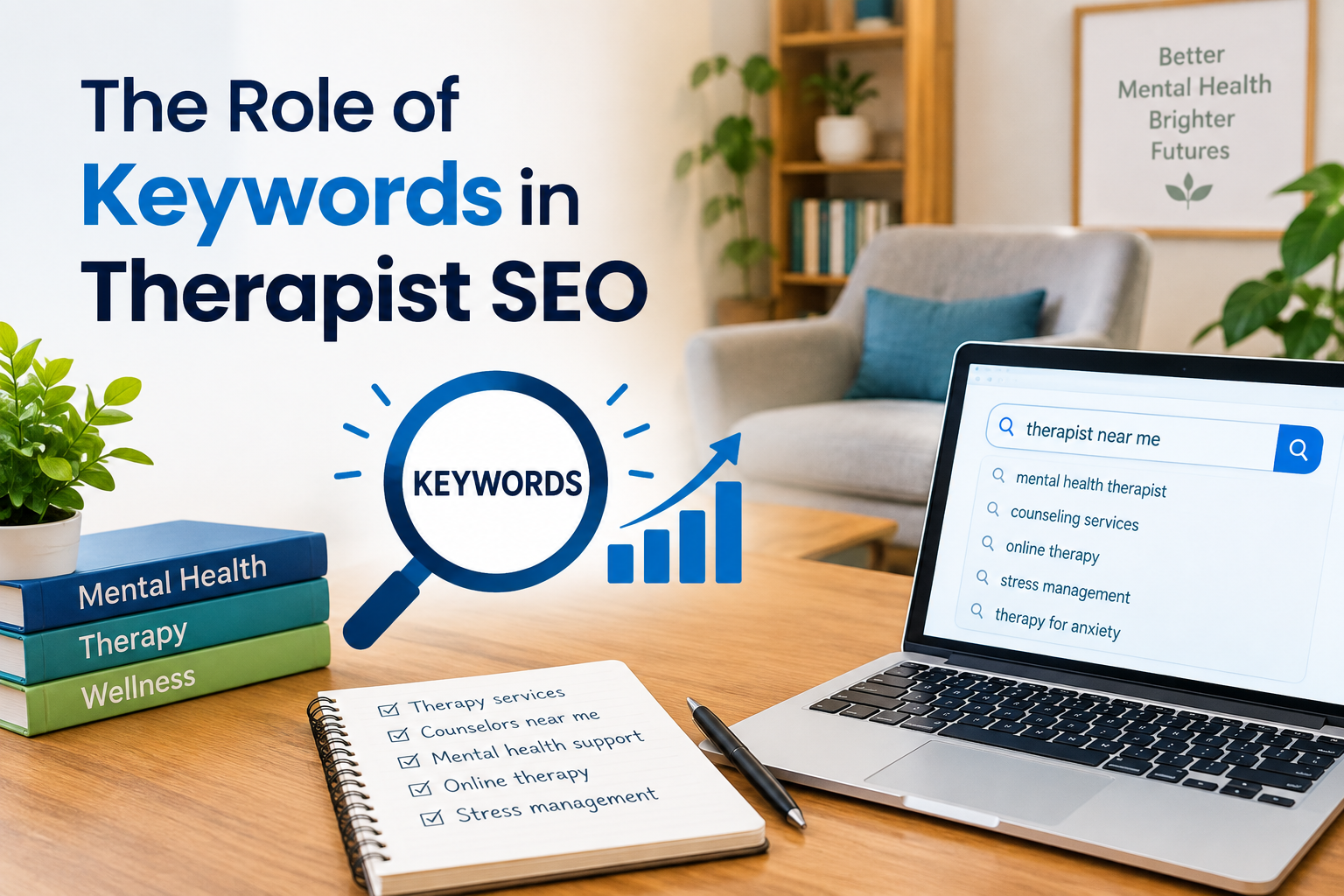
When people need professional mental health support, many begin their search online. They may type phrases such as “therapist near me,” “anxiety therapist,” or “online therapy for depression” into Google. For therapy practices, appearing when potential clients search for these services can make a significant difference in attracting relevant website visitors. This is where keywords become an important part of search engine optimization.
Keywords help search engines understand what a website and its individual pages are about. However, effective optimization is not about repeating the same phrase as many times as possible. Google warns against keyword stuffing and emphasizes content that provides value to people. A successful strategy focuses on using relevant search terms naturally while creating useful, trustworthy information for prospective clients.
Keywords are words and phrases that people use when searching for information, products, or services online. For a therapist, these may include terms related to specialties, treatment approaches, locations, and client needs.
For example, a therapist specializing in anxiety may target phrases such as “anxiety therapist,” “therapy for anxiety,” or “anxiety counseling in [city].” Someone offering relationship counseling might focus on terms such as “couples therapist” or “marriage counseling.”
Understanding these search phrases allows therapists to create website content that closely matches what potential clients are looking for.
Keywords provide direction for website content and help connect a therapy practice with relevant searches. When strategically incorporated into page titles, headings, service descriptions, and informative articles, they can make it easier for search engines to understand a page’s subject.
A strong keyword strategy can also improve the user experience. Visitors should quickly understand what services a therapist provides, which conditions they address, and where they are located. Clear and relevant content can help potential clients decide whether a practice is suitable for their needs.
For therapists developing a long-term online marketing strategy, Therapists SEO services for improving online visibility can help organize keyword research and website optimization around the needs of a specific practice.
Not every popular keyword is appropriate for every therapy practice. The best keywords are closely connected to the therapist’s services, expertise, location, and target audience.
Start by considering what prospective clients might search for. Think about:
Long-tail keywords can also be valuable. Instead of targeting only a broad term like “therapy,” a practice could create content around a more specific phrase such as “online therapist for anxiety in California.” These searches may have lower competition and can better reflect a user’s specific needs.
Once relevant keywords have been identified, they should be incorporated naturally throughout the website. Important locations may include the page title, main heading, introductory text, service pages, image descriptions where appropriate, and relevant internal links.
The goal is to make the content easy to understand rather than writing specifically for search engines. For example, instead of repeatedly using the phrase “anxiety therapist” in every sentence, explain the therapist’s approach, services, treatment process, and who may benefit from the service.
This natural approach makes the page more useful while still providing search engines with clear context.
Location-based keywords are especially important for therapists who serve clients in a specific geographic area. A potential client may search for “therapist in Austin,” “child therapist near me,” or “depression counseling in Chicago.”
Creating dedicated, useful location and service pages can help a practice address these searches. However, each page should offer genuinely useful information rather than simply changing the city name on nearly identical pages. Google identifies creating substantially similar pages for search manipulation as a form of doorway abuse.
A therapist should also keep business information consistent and provide clear details about their location, service area, contact options, and specialties.
Keyword research should never replace quality. A website can contain carefully selected search terms and still fail to attract or retain visitors if its content is vague, repetitive, or unhelpful.
A better strategy is to use keywords as a starting point for answering real questions. A therapist could create articles explaining how therapy works, what to expect during an initial session, signs that professional support may be helpful, or differences between various therapy approaches.
This creates content that serves both search intent and the needs of potential clients. Google also continues to emphasize useful, people-first content rather than content created primarily to manipulate rankings.
One of the most common keyword mistakes is using a target phrase excessively. Repeating a keyword unnaturally can make an article difficult to read and may be viewed as keyword stuffing.
For example, a paragraph that repeatedly says “therapist in New York” without adding meaningful information does not provide a good experience for readers. Instead, use variations and related terminology where appropriate while focusing on clear, natural writing.
The primary purpose of keywords should be to clarify relevance, not to fill a page with repeated phrases.
A consistent content strategy can help therapists target a wider range of relevant searches over time. Each important service can have its own optimized page, while blog articles can answer specific questions and address informational searches.
For example, a practice offering trauma therapy could create a core service page and supporting articles about trauma-informed therapy, what clients can expect during treatment, and common questions about seeking professional support.
Internal links can then connect related pages and help visitors discover additional information. This creates a more organized website while strengthening the relationship between related topics.
Keyword optimization should be monitored rather than treated as a one-time task. Search performance can change as user behavior, competition, and search results evolve.
Therapists can review impressions, clicks, search queries, and page performance through tools such as Google Search Console. The information can reveal which topics attract visitors and which pages may need improvement.
It is also important to remember that rankings are only one part of success. Relevant website traffic, engagement, appointment inquiries, and conversions are ultimately more meaningful indicators of whether an SEO strategy is supporting business goals.
Keywords play an important role in connecting therapy practices with people actively searching for mental health services. A thoughtful keyword strategy helps therapists understand their audience, organize website content, improve relevance, and address specific search needs.
The most effective approach is not to use keywords excessively but to integrate them naturally into useful, original, and client-focused content. By combining relevant search terms with strong service pages, informative articles, local optimization, and a positive website experience, Therapists SEO can become a valuable part of a broader digital marketing strategy.
Why are keywords important for therapist websites?
Keywords help search engines understand what a therapist’s website and individual pages are about. They can also help connect the website with searches that are relevant to the therapist’s services and specialties.
What types of keywords should therapists target?
Therapists can target keywords related to their specialties, services, treatment approaches, locations, and common client questions. Long-tail keywords can be particularly useful for addressing specific search intent.
How many times should a keyword appear on a page?
There is no fixed ideal number. Keywords should appear naturally where they make sense. Excessive repetition can reduce readability and may be considered keyword stuffing.
Are local keywords important for therapists?
Yes. Therapists serving a specific area can benefit from relevant location-based searches. Terms combining a service or specialty with a city or service area can help attract people looking for local support.
Can blog content help with therapist keyword optimization?
Yes. Helpful blog articles can address questions and topics related to a therapist’s services. They can also create opportunities to target specific informational searches and connect readers with relevant service pages.