

Therapist SEO Services for Better Rankings and Leads
Oct 16, 2026


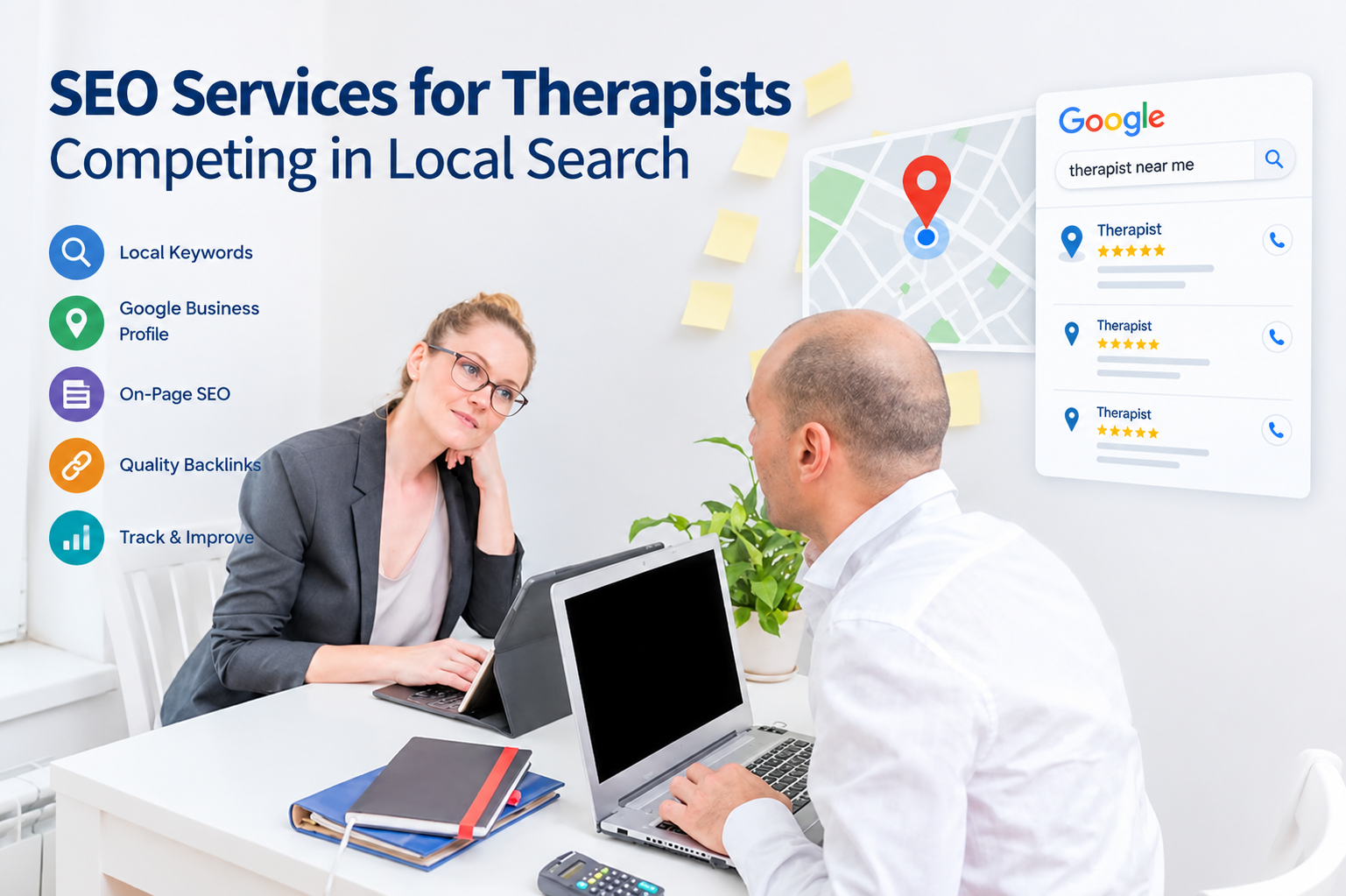
When someone searches for a therapist nearby, they are often looking for help they can trust and access conveniently. Whether the search is “therapist near me,” “anxiety therapist in [city],” or “couples counselor near me,” appearing prominently in local search can make a meaningful difference to a therapy practice. With more professionals competing for the same audience, having a well-optimized website is no longer simply an advantage—it can be an important part of building a sustainable online presence.
Local search optimization helps therapists connect with people who are actively looking for services in a specific geographic area. Effective Therapist SEO Services can improve a practice’s visibility by combining website optimization, locally relevant content, business information, technical improvements, and other strategies designed to make the practice easier to discover.
Therapy is inherently personal. People typically want to find a professional who understands their needs, offers the right type of support, and is conveniently located or available within their service area. Search engines help users narrow down these choices.
A therapist may have an excellent reputation offline, but that reputation does not automatically translate into strong search visibility. If a website does not clearly communicate its location, services, specialties, and expertise, potential clients may have difficulty finding it.
Local SEO focuses on making these details clear and useful. It can help a practice appear when prospective clients search for relevant therapy services in their community.
A complete and accurate Google Business Profile is an important part of local visibility. Therapists should make sure their business information is accurate and consistent, including the practice name, address or service area, phone number, website, business category, and hours.
The profile should accurately represent the real-world practice rather than being overloaded with keywords. Keeping information current also helps potential clients know what to expect before they contact the practice.
Photos, services, and other relevant profile information can also make a listing more useful to searchers. A professional and informative profile can create a stronger first impression while helping users determine whether the practice fits their needs.
A therapist’s website should make it immediately clear where services are offered. Instead of relying on a single generic “Services” page, consider creating useful content around the specific communities and services the practice genuinely serves.
For example, a therapist might develop pages focused on:
The goal should not be to create repetitive pages filled with city names. Instead, each page should provide genuinely useful information and clearly explain the service, who it is for, and how clients can get started. Google emphasizes helpful, reliable, people-first content rather than content created primarily to manipulate rankings.
Choosing a therapist is different from choosing an ordinary local service. Potential clients often want reassurance that they are dealing with a knowledgeable, credible professional.
That makes quality content particularly important. Therapist websites can publish educational articles addressing common questions, explain different therapy approaches, introduce practitioners, and provide clear information about areas of specialization.
Content should be accurate, original, easy to understand, and written for people first. Google notes that expertise, experience, authoritativeness, and trust are especially important considerations for topics that can affect people’s well-being.
This is where consistent Therapist SEO Services can support a broader content strategy. Rather than producing articles simply to target keywords, the focus should be on answering the questions potential clients are actually asking.
Every important page on a therapy website should have a clear purpose. Page titles, headings, descriptions, URLs, internal links, and content should work together to communicate what the page offers.
For instance, a page about trauma therapy should clearly discuss trauma-related services rather than attempting to rank for every possible therapy keyword. Internal links can then connect visitors to related services, practitioner biographies, FAQs, and contact information.
This structure helps users navigate the website while giving search engines clearer context about the site’s content.
A website can contain excellent content and still provide a poor experience if it loads slowly, works badly on mobile devices, or has technical problems that interfere with crawling and indexing.
Technical SEO may include improving page speed, checking broken links, making navigation easier, ensuring mobile usability, reviewing indexing issues, and implementing appropriate structured data.
Google explains that structured data can help search engines understand information about a business and its pages. Local business structured data can communicate details such as business information, location, and contact details when implemented correctly.
A technically sound website gives both search engines and prospective clients a better foundation.
Local authority can also be strengthened through legitimate mentions from relevant organizations and websites. Therapists may have opportunities to appear in professional directories, community organizations, local publications, educational resources, or industry-related websites.
The emphasis should be on relevance and credibility rather than collecting as many links as possible. A small number of meaningful local references can be more valuable than a large collection of unrelated or low-quality links.
Getting someone to visit your website is only part of the process. The website should also make it simple for a prospective client to take the next step.
Important information should be easy to find, including:
A simple call-to-action can guide visitors without making the experience feel overly promotional. For practices looking for specialized support, exploring professional SEO assistance for therapists and local practices can be a practical next step.
SEO is not something that should be implemented once and forgotten. Search behavior, competitors, website performance, and client needs can change over time.
Therapists can monitor organic traffic, search queries, rankings, website engagement, calls, contact submissions, and other meaningful conversions. These insights can reveal which services attract attention and where improvements may be needed.
Effective Therapist SEO Services should therefore be viewed as an ongoing process. Regular analysis allows a practice to identify opportunities, improve weak pages, update outdated information, and build on strategies that are producing meaningful results.
Why is local SEO important for therapists?
Local SEO helps therapists become more visible to people searching for therapy services within a particular geographic area. It can make it easier for potential clients to discover relevant services and learn more about a practice.
Does a therapist need a physical office for local SEO?
Not necessarily. Eligibility and local visibility depend on the business model and applicable platform guidelines. Therapists should accurately represent where and how they provide services rather than creating misleading location information.
How long does therapist SEO take to show results?
SEO results vary depending on competition, website condition, location, content quality, authority, and the strategies being implemented. It is generally a long-term marketing approach rather than an overnight solution.
Should therapists create separate pages for every nearby city?
Only when those pages provide genuine value and represent areas the practice actually serves. Creating many nearly identical pages solely to target different locations can create a poor user experience.
What makes Therapist SEO Services effective?
A strong strategy combines local optimization, useful content, technical SEO, on-page improvements, trustworthy business information, relevant authority-building, and ongoing performance analysis. The objective should be to attract the right local audience while providing a helpful website experience.
Competing in local search requires more than adding a city name to a website. Therapists need an online presence that clearly communicates their services, location, expertise, and value to prospective clients. From optimizing business information and creating useful local content to improving technical performance and building trust, every element can contribute to stronger visibility.
For therapists competing in increasingly crowded markets, Therapist SEO Services can provide a structured approach to improving local search presence while keeping the needs of potential clients at the center of the strategy.